
Granite Vs Quartz – What is the Best Option for Countertops?
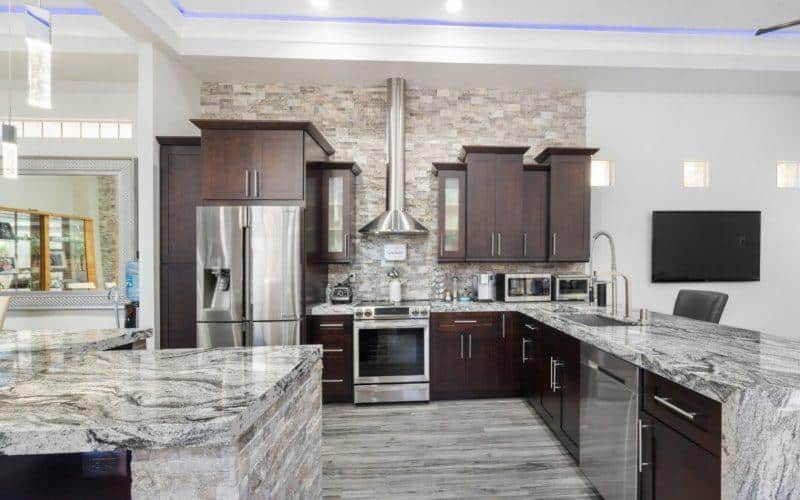
Granite and Quartz are two of the most sought after materials for flooring and countertops. Quartz is an engineered stone that is versatile and customizable, whereas granite is an all-natural stone that gives your house a sense of irreverent beauty.
A choice between the two is completely subjective, and will depend on a lot of factors that you might not even have considered yet. So prepare a list of what you are looking for in the material for your kitchen countertops, flooring, etc. — and use this guide to make an informed and hopefully the correct choice.
All You Need to Know About Granite Countertops
Granite is a natural igneous rock, mined around the world from quarries. Having been in use since ancient times to build monuments and sculptures, granite has been known to man as a durable and beautiful stone. In fact, the Great Pyramid of Giza has a giant granite sarcophagus.
Below we discuss some of the pros and cons of granite, especially as a material for countertops.
Pros of Granite
- Granite is an authentic, natural stone. If that’s what you prefer, granite is a great choice.
- Granite is available in many different hues and patterns. The pool of choice might not be as large as Quartz, but is extensive enough to not leave you wanting.
- Granite is extremely resistant to heat and physical damage such as cracks and chipping. It is durable enough to last for decades if taken care of properly.
- Even if you do somehow end up with scratches or chips on your countertop, it is really easy to repair a granite countertop and can essentially be treated as a DIY job.
- Granite has a large range when it comes to affordability. You can buy it as cheap as $40 per square foot or go as high as $200.
Cons of Granite
- Granite is a porous material, which makes it prone to bacterial growth if not cleaned regularly. It requires annual or semi-annual sealing depending on the sealant you use.
- The natural aspect of granite gives you some beautiful patterns, but it also means that no two slabs are similar. So it is really hard to replace if you end up damaging a section.
- Choosing granites based on ‘samples’ is a risky business, as the final product might not be identical to the sample you picked out at the store.
- Granite countertops are prone to etching by acidic foods and drinks. So it is always advised to clean any spills promptly and properly.
Related: Why Choose Natural Stones for Your Kitchen Renovation
Everything You Need to Know About Quartz Countertops
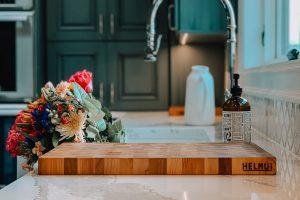
Although quartz itself is a naturally occurring material, the hybrid used to manufacture countertops is about 92-95% natural quartz and the rest is a mix of different resins. Considered an engineered stone, quartz is far more customizable than granite.
The advantages vs disadvantages of choosing quartz are mentioned below:
Pros of Quartz
- Being an engineered stone, quartz provides a more consistent and extensive pool of choice.
- Quartz is non-porous and as a result impervious to bacterial growth. Which also means it doesn’t have to be sealed periodically.
- The non-porosity also means that it is not prone to etching and thus is a better option for homeowners with little kids.
- Apart from heat, quartz is pretty much safe from any other form of damage. In fact, most of the reputed dealerships offer extensive warranties on quartz.
- Sections of quartz are a little easier to replace; making it a good economical choice if damaged.
Cons of Quartz
- The biggest disadvantage of quartz is its weakness against heat damage. Placing a hot pan directly on a quartz surface can severely damage it.
- Quartz is prone to scratching and can be hard to repair once damaged.
- Quartz is also prone to fading under direct sunlight. Which makes it unsuitable for kitchens that receive a lot of natural light.
- With quartz slabs, it is hard to disguise the seams.
Granite vs Quartz as a Countertop Material : A Direct Comparison
1. Based on Cost
Granite has a comparative wider price range than quartz. Granite is available at $40 per square foot but the premium kinds can go up to $200.
Quartz, on the other hand, starts a little higher than granite (about $55-60 per square foot) but peaks at around $150.
2. Based on Durability
Granite is resistant to heat and chipping, but prone to bacterial growth due to its porosity. Even if damaged, repairing a granite slab doesn’t require professional help.
Quartz, unlike granite, doesn’t require sealing at all since it is non-porous. However, it is susceptible to heat damage and fading due to exposure to direct sunlight.
3. Based on Choices
Granite has a smaller pool of choice than quartz. If a part of your granite countertop is damaged, finding an exact replica would be pretty much impossible. Although the natural charm in uniqueness is something that attracts a lot of homeowners.
Quartz can be manufactured as per specifications, and finding a design you like is not much of a hassle. Some homeowners do complain that most of the quartz products do look a little cheap and lustreless.
4. Based on Environmental Impact
Granite has a larger environmental impact as compared to engineered stones, since it needs to be mined at specific locations and then flown around the world wherever the demand is.
Quartz can be manufactured locally and with environmentally conscious methods. Thus reducing the overall carbon footprint.
Choosing the Right Material for Your Kitchen Countertop
Choosing an element as important and big as countertops/flooring etc. is a big decision. An investment as consequential as this should never be taken lightly.
After a comprehensive analysis, it is important to note that what you choose depends entirely on your habits and expectations. There is no unanimous answer out there, but there is always an answer that’s right for you!
Everything comes down to personal preference and as long as you commit time and research all your options thoroughly — there will be no bad choices!

GBC Staff
Hi, my name is GBC Staff. A passionate garden designer and nature lover with over 10 years of experience in landscape architecture